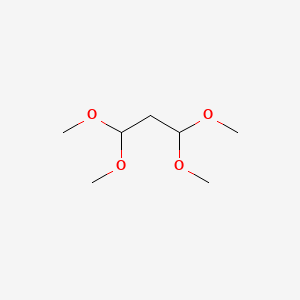
1.1.3.3-Tetramethoxypropane
1,1,3,3-Tetramethoxypropane by Zyntex is a high-purity chemical intermediate used as a protected form of malonaldehyde in pharmaceutical synthesis and biochemical research.
Description
Comprehensive Product Overview of 1,1,3,3-Tetramethoxypropane
Exceptional stability under neutral conditions provides a major competitive advantage in the handling of reactive aldehydes. This acetal works by masking the highly reactive malonaldehyde centers until they are triggered by specific catalytic conditions. It helps manufacturers achieve higher yields in the synthesis of pyrimidines and other nitrogen-containing heterocycles. For instance, 1,1,3,3-Tetramethoxypropane is frequently used in the preparation of specialized photographic chemicals and dyestuffs. Consequently, it improves the efficiency of multi-step organic synthesis. As a result, Zyntex ensures rigorous quality control for our supply, ensuring maximum reliability during your manufacturing cycle.
Moreover, Zyntex supplies specialized grades for the diagnostic and clinical research sectors. This compound acts as a critical standard in malondialdehyde (MDA) assays, which are used to measure oxidative stress in biological samples. It pushes the boundaries of medical diagnostics by providing a stable reference for lipid peroxidation studies. At the same time, it serves as a crucial reagent in the synthesis of agrochemical active ingredients. In short, our product serves as a versatile “masked reagent.” It supports both the precision of medical research and the complex requirements of industrial chemical synthesis.
Recently, scientific interest in its application for advanced polymer cross-linking has grown. It provides a controlled method for introducing functional groups into polymer chains. Because of this, Zyntex offers refined grades designed to meet the rigorous specifications of modern materials science. Ultimately, choosing Zyntex secures a reliable and transparent chemical supply chain. We balance acetal chemistry expertise with rigorous batch analysis. To conclude, our commitment ensures your 1,1,3,3-Tetramethoxypropane applications achieve the highest levels of performance and purity.
Key Industrial Applications for 1,1,3,3-Tetramethoxypropane
This high-purity chemical intermediate is essential in these four primary sectors:
💊 Pharma Synthesis
Essential building block for heterocyclic drugs. Thus, it enables the synthesis of complex pyrimidine structures.
🔬 Clinical Research
Key standard for oxidative stress assays. Undoubtedly, it is vital for accurate lipid peroxidation measurements.
🧪 Fine Chemicals
Used in the production of dyes and photo-chemicals. Consequently, it is vital for specialized industrial coloring.
🚜 Agrochemicals
Acts as an intermediate for pesticide manufacturing. Specifically, it supports modern crop protection technology.
Technical Specifications
| Parameter | Standard Value |
|---|---|
| Product Name | 1,1,3,3-Tetramethoxypropane |
| Molecular Formula | C7H16O4 |
| Assay (Purity) | ≥ 99.0% |
| CAS Number | 102-52-3 |
📝 Safety & Handling: 1,1,3,3-Tetramethoxypropane is a combustible liquid. Therefore, store in a cool, well-ventilated area away from open flames. It can release methanol upon hydrolysis; ensure adequate ventilation during use. Use standard PPE including solvent-resistant gloves and safety goggles. Always consult the Safety Data Sheet (SDS) for detailed ecological and storage protocols.